
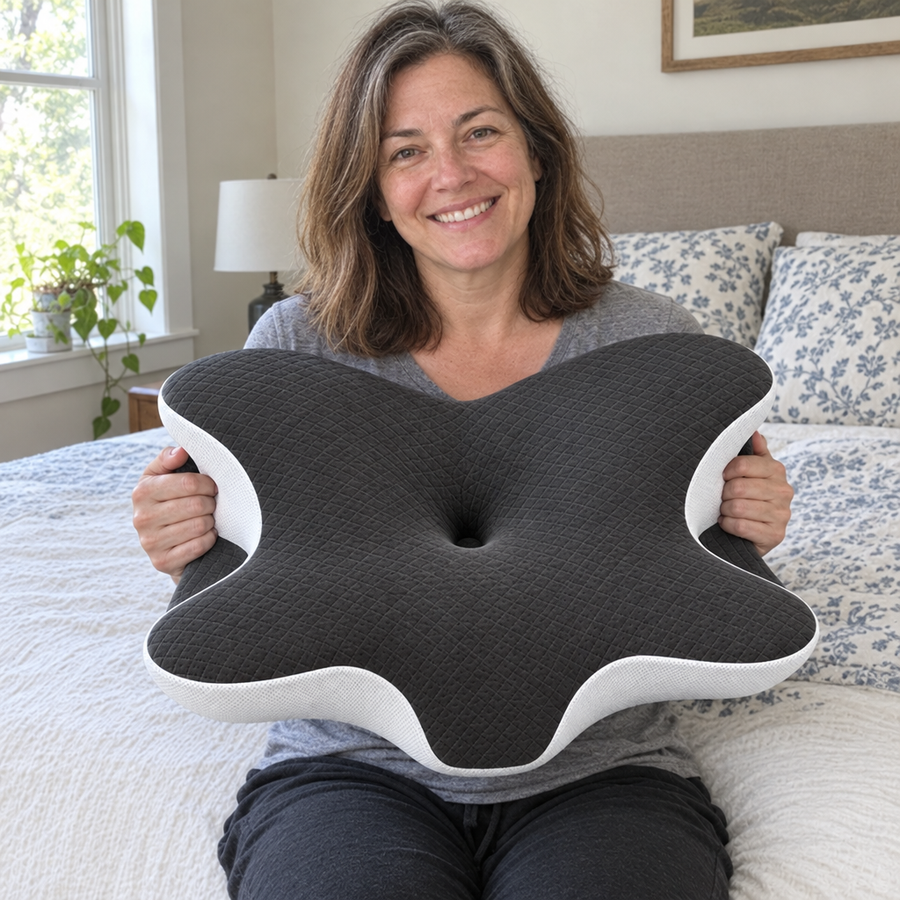
7 Reasons 60,000+ Side Sleepers Switched to the Soothe Cervical Pillow
 Written by Dr. Amanda Larson, DC — chiropractor, 19 years
1. It Closes the Two-Inch Gap That's Bending Your Neck All Night
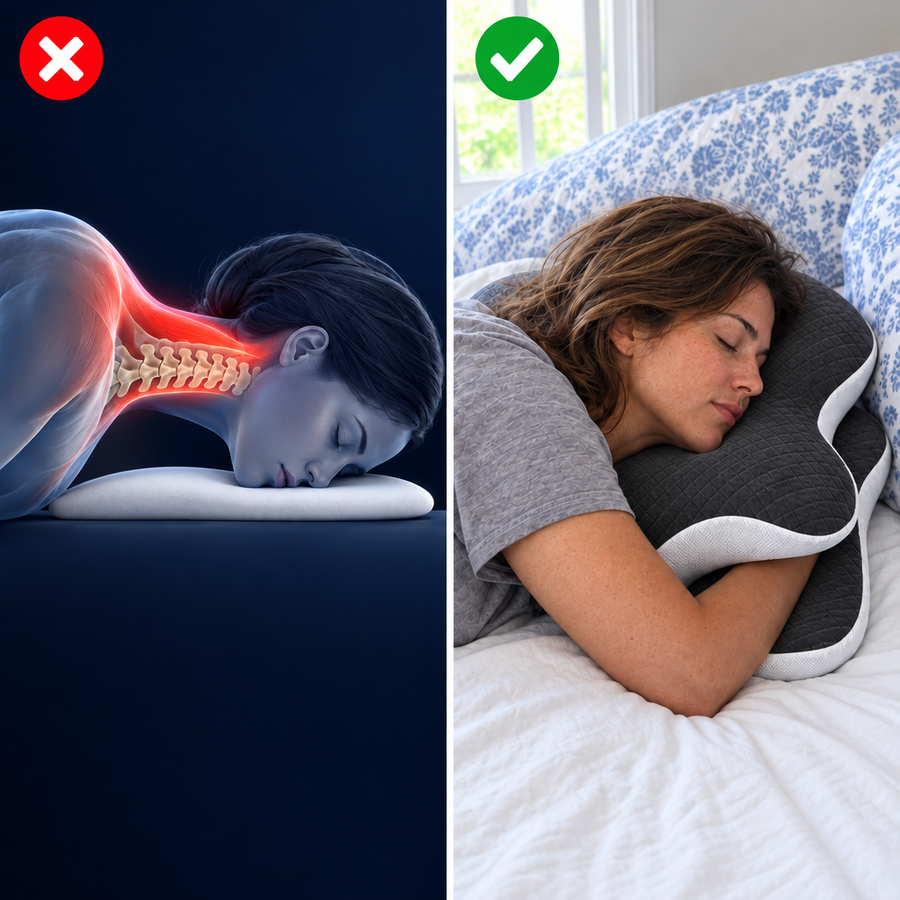
Lie on your side on a regular pillow and your head sits two to three inches lower than it should. Your shoulder is wide, and a regular pillow isn't tall enough to fill the space between your shoulder and your head. So your head sags toward the mattress, and the muscles on the top side of your neck spend seven hours holding it up. That's your stiff neck. It isn't your age, your posture, or your spine. I adjusted it for years before I understood that.
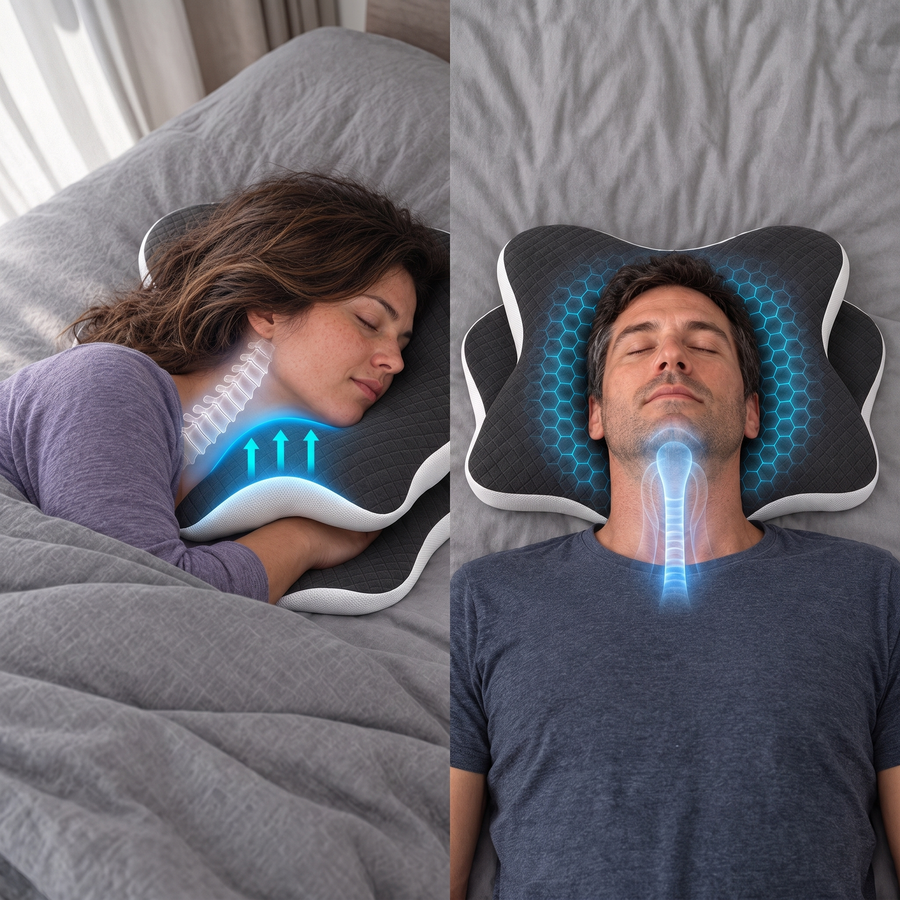
The Soothe's raised Neck Ridge lifts your head to shoulder height and keeps it there all night. The gap closes, the muscles finally let go, and the neck you wake up with is the same one you went to sleep with. No hand on the back of it before you've sat up. No ten minutes of stretching before you can look left. You just get up and get on with your day.
2. Eight Hours of Sleep Finally Feels Like Eight Hours
The most common thing I hear from patients isn't "my neck hurts." It's "I slept eight hours and I feel like I slept three." That's what a neck that works all night does to you. The muscles never switch off, so the sleep never fully counts, and you wake up tired and sore before the day has even started.
When your neck is held at the right height, it stops working while you sleep. That's the whole difference. My patients describe the first week on the Soothe the same way: they wake up, turn their head to check the time, and it just turns. No wince, no hand on the neck, no stretching before they can get up. And because nothing was straining all night, they wake up actually rested, with the kind of energy they'd stopped expecting from a night's sleep. 97% of buyers reported less neck pain in the morning and 94% less stiffness. To me those numbers mean one thing: the difference between dreading the alarm and feeling like yourself again before breakfast.
3. Your Arm Finally Has Somewhere to Go That Isn't Under Your Head
If you can only sleep with your arm shoved under the pillow, that's not a habit. It's a shim. Your body knows the pillow is too low, so it uses your own arm to make it taller, then crushes that arm under your skull until it goes dead at two in the morning. I watched a patient do it on my table, and it's the reason I stopped adjusting her and started looking at her pillow.
The scooped Arm Channels on each side give your arm a place to rest beside your head instead of under it. Most people say the same thing the first night: "Oh. That's where my arm goes." 89% of buyers stopped needing an arm under the pillow within 30 nights. For them that means an arm that doesn't wake them up at 2 AM, a shoulder that isn't sore by lunch, and one less thing their body is quietly fighting every night. You stop managing your sleep and just sleep.
Check Availability Now →4. It Keeps Your Chin Up Instead of Dropping It to Your Chest
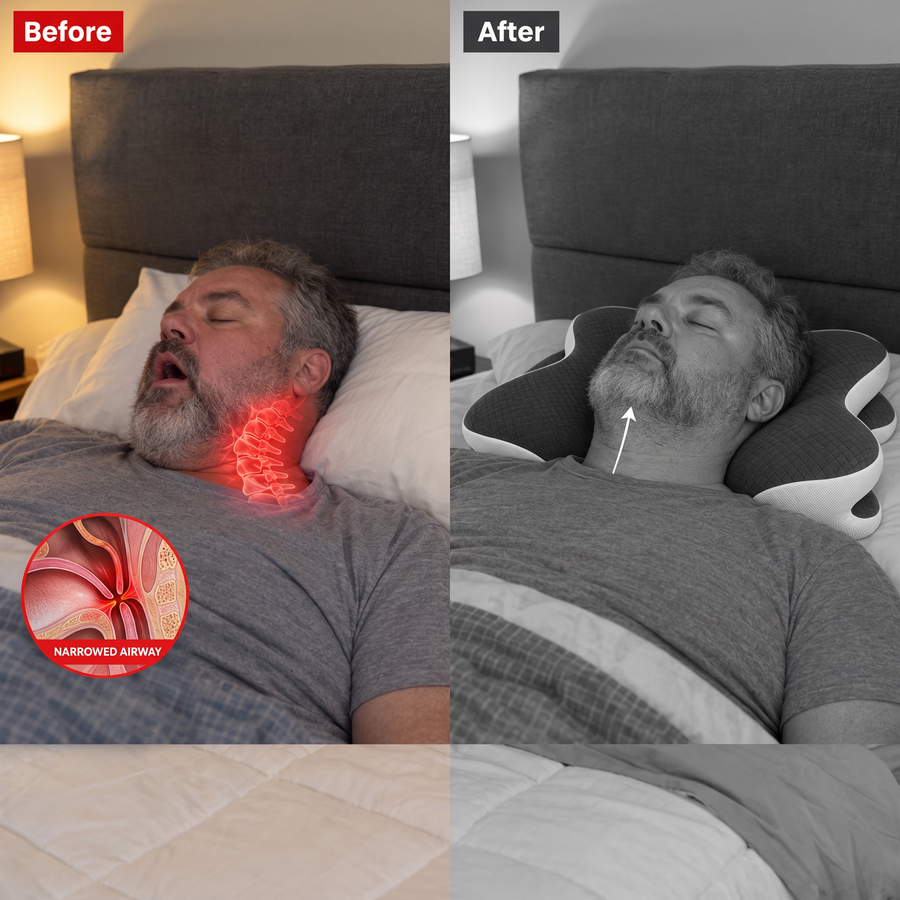
Nobody stays on their side all night. You roll. And the second you're on your back, a regular pillow has nothing to hold your head in place. Your head rolls, your chin drops toward your chest, and your neck spends the rest of the night in a second bend. This is why most "neck pillows" I've seen fail. They fix your side and do nothing for your back.
The Head Cradle in the centre catches the back of your head when you roll, so your chin stays up and your neck stays neutral whether you're on your side or your back. You don't have to train yourself to sleep a new way, and you don't wake up to reposition. You sleep the way you already do, and your neck stays supported either way. That's what a normal night is supposed to feel like. You don't think about it.
5. It Isn't Firmer Than the Pillow in Your Closet. It's Shaped. And It Stays That Way.
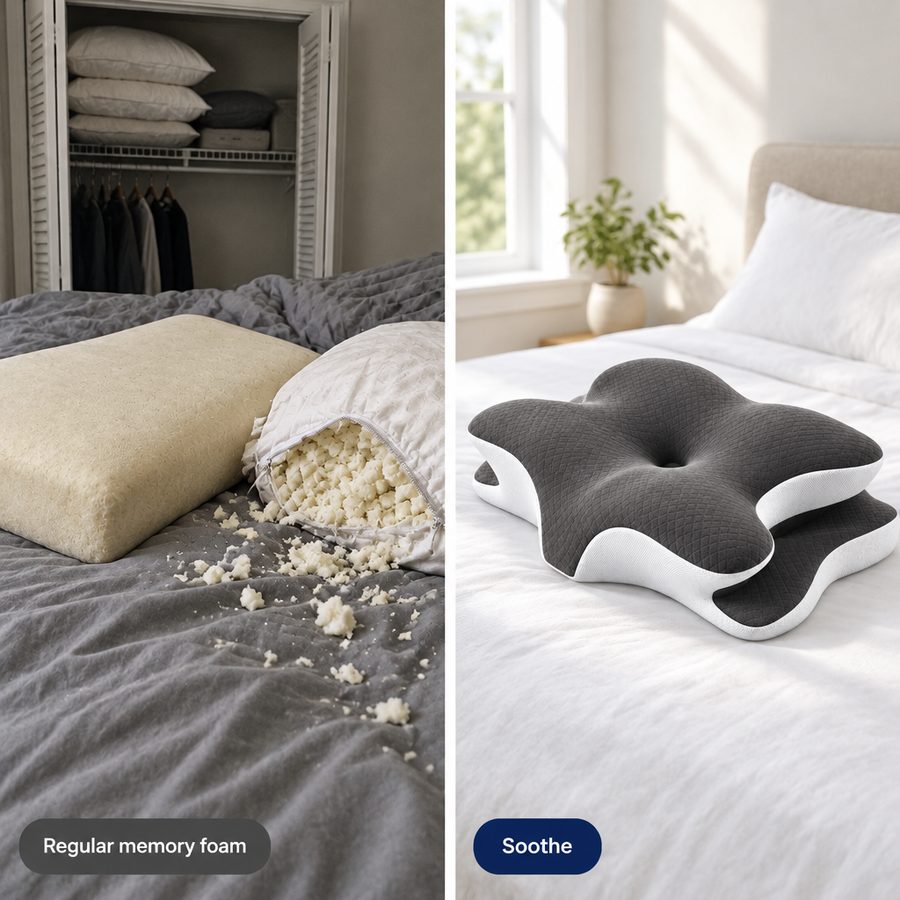
You've probably already bought the $40 "orthopedic" memory-foam pillow everyone recommends. My patients describe it the same way every time: like sleeping on a brick. It's in the closet inside a week. After that comes the "adjustable" one, where you spend ten minutes a night pulling shredded foam out of a bag, and it's the right height on Tuesday and the wrong height by Friday. Both of them are built on the same mistake: that a stiff neck needs a firmer pillow. It doesn't. It needs a pillow that's taller under your neck, lower under your head, and stays that way.
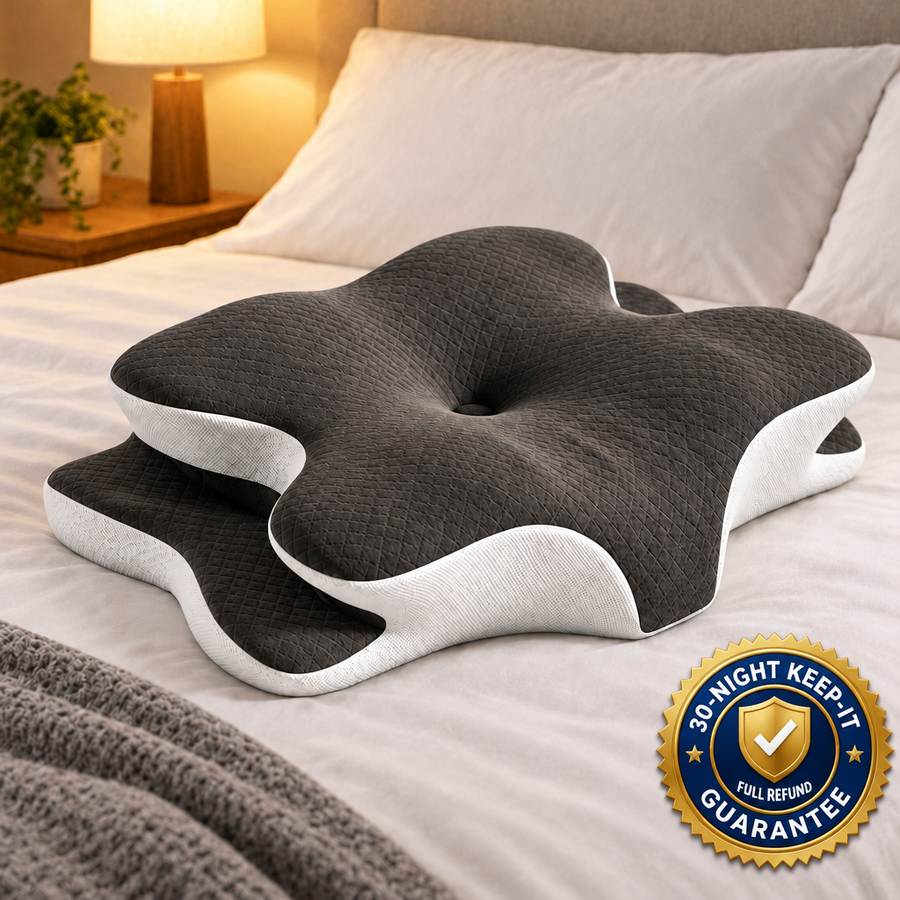
The Soothe isn't hard. It's shaped. There's a ridge where your neck needs lift, a dip where your head settles in, and a channel on each side for your arm. The foam is soft where your face lands and firm where your neck needs the support. It's cut from one block of dense memory foam, so there's nothing to adjust and nothing that packs down by Friday. It comes with a cooling case and a zip-off washable cover, and it fits a standard pillowcase. Every patient tells me it looks weird. Then they lie on it. And for the first time in a long time, they stop thinking about pillows at all.
What to expect the first night: most people feel the difference immediately. If the shape feels strange for a night or two, that's your neck sitting at a height it hasn't been in years. Give it three nights. By the fourth, a flat pillow feels wrong.
6. It's Built on What the Pillow-Height Studies Actually Show
This isn't my theory, and it isn't a sleep-brand marketing line. In 2021 a review in the journal Healthcare pulled together every pillow-height study it could find, and the pattern was the same every time: the wrong height bends the neck and lights up the trapezius, the exact muscle that hurts at 6:40 in the morning. A Korean spine study measured the same thing on X-rays. My profession has known this for decades. There's just no appointment to bill for it, so it stays off the intake form.
The Soothe is the one pillow I've found that puts the research into a shape: the right height on your side, the right cradle on your back, and your arm out from under your head. I sent 40 of my own patients home with one before I put my name on it. Most of them stopped booking. Not because they learned to live with it. Because there was nothing left to come in for. That's what "fixed" is supposed to mean: the problem stops being part of your week.
Real People, Real Mornings
7. It Costs Less Than One Adjustment, and If It Doesn't Work You Keep It
Here's the math I'd never say out loud in my own office. An adjustment is $125. Twice a week, that's $1,000 a month, and the relief lasts about as long as the drive home. Add a new pillow every eight months, another $40 to $80 into the closet, and you've probably spent more on managing this than the fix costs. And that's only the money. The real cost is every morning you've started sore and tired because your neck was still a problem.
The Soothe is $139.90. For the launch it's 50% off: $69.95. Less than one visit. And because you've been burned before, here's my promise: sleep on it for 30 nights, side, back, however you actually sleep. If you don't wake up one morning thinking "I forgot I even had a stiff neck," email support@getsoothe.shop and say it didn't work. Full refund within 48 hours. No forms, no store credit, no shipping it back. You keep the pillow. The worst case is you own a free one. The best case is you get your mornings back, and with them, the version of you that isn't always a little bit in pain. 2,734 people have taken me up on that in the last 12 months, and they've rated it 4.8 out of 5.
Morning Neck Pain's Simplest Fix: The Right Height, Both Ways You Sleep
One block of dense memory foam shaped with a Neck Ridge, a Head Cradle and two Arm Channels, so your neck stays level on your side and your chin stays up when you roll. For side sleepers who just want to wake up without neck pain.
2-Pack $99.99 — under $50 each
Free US shipping · Ships in 3–5 days
30-Night Keep-It Guarantee · Not sold on Amazon or eBay